DGCE Undergraduate Financial Aid Guide

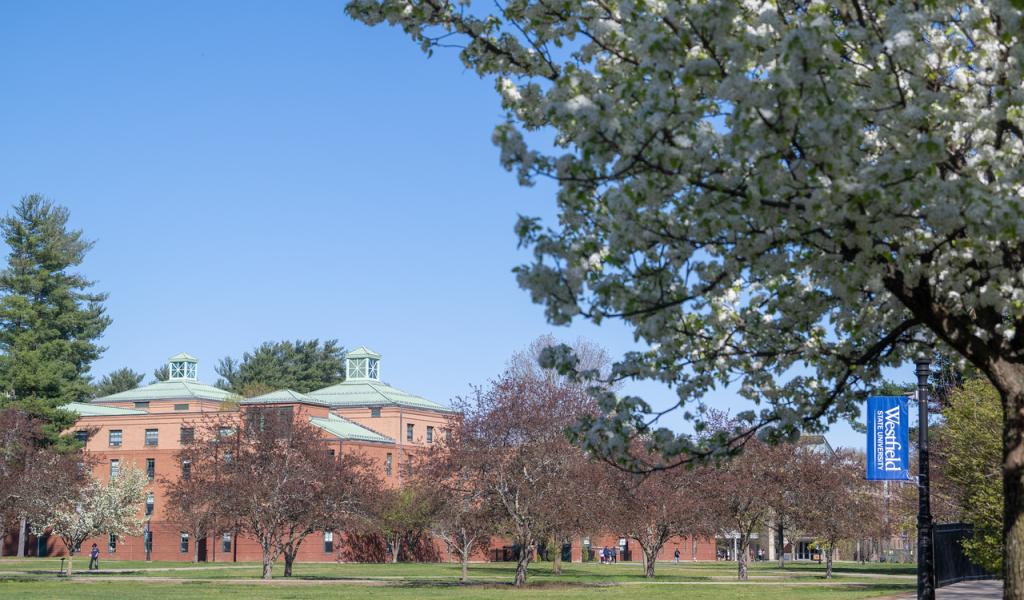
Campus in the spring with flowering trees and a WSU flag hanging from a light post.

How Financial Need Is Determined

Your financial need is calculated using the following formula:

Cost of Attendance (COA) − Student Aid Index (SAI) = Financial Need

  • Cost of Attendance (COA):  Based on your direct and indirect expenses related to being a student. 
  • Student Aid Index (SAI):  An eligibility index number which results from the information that you provided on your FAFSA form.

Your Financial Aid Notification

Your financial aid may include a combination of grants, loans and work study. 

All DGCE students are initially awarded financial aid based on full-time enrollment (12 credits per semester). If your enrollment changes, your financial aid will be recalculated. Visit this website to report any changes in enrollment. 

For more information about the funds you have been offered, consumer information, or a glossary of financial aid terms, please refer to: westfield.ma.edu/financialaid.

Renewing FAFSA and Staying Financial Aid Eligible

To stay eligible for all forms of Financial Aid, including private loans, you must maintain Satisfactory Academic Progress (SAP). Students must earn 67% of the cumulative credits attempted and have a GPA that is in good standing with the University. 

For almost all forms of financial aid, including loans, you must be enrolled at least half-time (six credits) to remain eligible. All Pell eligible students may be eligible for the Pell Grant while enrolled less than half-time. Any changes made to your credit enrollment may affect your financial aid. Please let our office know if your credit enrollment changes. 

A new FAFSA should be filed for each academic year. The FAFSA for the next academic year opens on October 1.

Cost of Attendance (COA)

Your overall Cost of Attendance will include items that are directly billed to you from the university (example: tuition and fees) and items that are not billed directly to you (example: books, supplies, and transportation).

Indirect costs for books, supplies, transportation and miscellaneous expenses are estimated and are included in the formula to determine your eligibility  for financial aid. COA budgets are designed to provide students with a reasonable estimate of total costs. Your COA is different than your bill. 

DGCE Undergraduate Students Estimated COA for 2026–27 

Students who are enrolled through DGCE are billed per credit. The 2026–27 Undergraduate DGCE rate, with the exception of RN to BSN, is $388 for each academic credit. The 2026–2027 rate for students who are enrolled in the RN to BSN program is $377 for each academic credit.

Expense CategoryUndergraduate  non RN to BSNRN to BSN
Tuition and Fees (for 9 credits)$6,984$6,786
Living Expenses (housing and food)*$14,830$14,830
Books/Supplies$1,200$1,200
Transportation$2,748$2,748
Miscellaneous**$2,402$2,402
Total:$28,164 $27,966

*Reflects housing and food expenses for off campus students. 
** Includes personal expenses, loan fee, etc. 
*** This cost of attendance is only an estimate. Your actual cost will be vary based on your enrollment.

Determine Your Plan to Pay for College

Students are responsible for paying the portion of the bill that is not covered by financial aid. Students may choose to pay for college in a variety of different ways. 

Balance Due Payment Deadline 

Fall Semester: July 24, 2026 
Spring Semester: December 18, 2026 

Students registering on or after the payment deadline dates must pay their full balance within five days  of registrations.

Installment Plan 

Students have the opportunity to join the installment plan. The installment plan allows students to pay their balance due in four payments each semester (fall and spring). There is an additional fee to establish the installment plan. For more information regarding paying your balance due, you can visit About Your Bill.

Supplemental Loans

Students can apply for additional private loans. Many students will need a creditworthy co-signer to apply with them. Both elmselect.com and credible.com are websites that can get you started in looking for private student loans. The Financial Aid Office at Westfield State University does not endorse any one private educational lender over another. Students can only borrow up to their full Cost of Attendance.

Terms and Conditions

By signing your 2026–2027 FAFSA and accepting your financial aid award, you agree to the following terms and conditions. Please review these carefully to ensure you fully understand them: 

1. Enrollment & Award Adjustments
  • Full-Time Assumption: All financial aid is initially awarded based on the assumption of full-time enrollment (12 or more credits).
  • Census Date Review: Your final eligibility will automatically recalculated and updated based on your actual enrollment status as of the Census Date. If you are enrolled in fewer than 12 credits at that time, your aid will be reduced.
2. Reporting Changes
  • Status Updates: You are responsible for notifying the Financial Aid Office of any changes to your enrollment, financial situation, or residential status, as these may affect your eligibility for specific funds.
  • Outside Resources: You must report any additional financial assistance received from external sources, including outside scholarships, employer tuition assistance, or waivers. These resources may result in a revision of your total aid package.
3. Withdrawal Policy
  • Federal Return of Funds: If you withdraw from classes after the first day of the semester, your financial aid eligibility (including student loans) may be reduced or canceled according to federal "Return of Title IV" regulations. This may result in a balance due to the University.
4. Disbursement

Schedule Financial aid funds will begin to be disbursed to student accounts on the following dates, provided all requirements are met:

  • Fall 2026: October 6, 2026
  • Spring 2027: February 19, 2027

For Federal Loan Borrowers, Accept Your Federal Direct Loans

For ALL borrowers, to accept or decline your Federal Direct Loan(s) you need to: 

  • Log in to MyWestfield, go to the “My Student Finances” card
  • Click “My Financial Aid”, and choose the “Award Offer” tab for the 2026–2027 award year
  • Scroll down to view your loans
  • Under the “Take Action” drop-down, select Accept or Decline your loans

For NEW student borrowers you need to go to studentaid.gov (log in with your FSA ID used to complete the FAFSA) and complete: 

  • Entrance Counseling
  • Master Promissory Note (MPN) 

If you do not formally accept your Federal Direct  Loan(s), the loan(s) will not show as a credit on your semester bill.

Owl Bucks, Book Money, and Refunds

If you have excess financial aid after direct costs are covered, you may move up to $1,000 per semester to your Owl Bucks account. Owl Bucks are loaded onto your student ID and can be used at the campus bookstore, restaurants, and participating local businesses, including online bookstore purchases through Owls Bucks. Moving funds to Owl Bucks is optional, and the request form is available on the campus website.

 Any remaining excess funds will be refunded directly to you through BankMobile in mid-October and mid-March. BankMobile will contact you to set up your refund preference.

Winter and Summer Sessions

Excess fall funds may be used for winter classes.

If eligible, you may request a Federal Direct Loan for summer if you have remaining annual loan eligibility. Summer loan requests typically begin in April. Federal Pell Grants, Federal Direct Plus Loans, and private loans may also be available for summer classes.

Loans and Grants: Rates, Award Amounts, and Limits

Federal Direct Loans*

Interest Rate

Federal Direct Loans: 6.52%

Loan Origination Fee

Federal Direct Loans: 1.057%

Independent Students, Annual Federal Direct Loan Limits

  • First year Undergraduates - $9,500
  • Sophomore year Undergraduates - $10,500
  • Remaining Undergraduate years - $12,500

Dependent Students, Annual Federal Direct Loan Limits

  • First year Undergraduates - $5,500
  • Sophomore year Undergraduates - $6,500
  • Remaining Undergraduate years - $7,500

Note: Dependent Students whose parents are not eligible for the Federal Direct Parent Plus Loan, are able to receive additional unsubsidized loan money. First and second year students, can receive up to $4,000 in additional funds and third year and beyond can receive up to an additional $5,000.

Aggregate Limits

  • Dependent Students - $31,000 
    (up to $23,000 may be subsidized)
  • Independent Students and Dependent Students whose parent cannot borrow PLUS Loans - $57,500
    (up to $23,000 may be subsidized)

*Based on 2026–2027 academic year
Parent PLUS Loan*
  • Interest Rate: 9.07%
  • Loan Origination Fee: 4.228%
  • Limits: Parents are eligible to borrow up to the cost of attendance after all aid is factored in
  • Aggregate limit $65,000 

*Based on 2026–2027 academic year

Pell Grant**
  • 2026–2027 Annual Maximum Award - $7,395
  • 2026–2027 Annual Minimum Award - $740
  • Students are awarded Pell Grant based on eligibility determined by the Federal Government
  • Individuals are limited to 12 full-time semesters (or the equivalent) of Pell Grant usage. You are limited to 600% (6 years full-time) of Pell Grant Funding

**Based on financial eligibility and/or full time enrollment

Mass Grant**
  • 2026–2027 Annual Maximum Award - $3,000
  • 2026–2027 Annual Minimum Award - $500
  • Students are awarded Mass Grant based on eligibility determined by the State Government
  • Individuals are limited to 8 full-time semesters/4 years of Mass Grant usage. 

**Based on financial eligibility and/or full time enrollment

Office Hours
Monday through Friday
During the school year: 8:30 a.m. – 4:30 p.m.
Summer: 8:00 a.m. – 4:00 p.m.

Exterior image of the Horace Mann Center

Contact Us

Office of Financial Aid
333 Western Avenue (Horace Mann Center, 1st Floor)